Leave a thought
Baggage Claim Is a Mental Health Test You Keep Failing
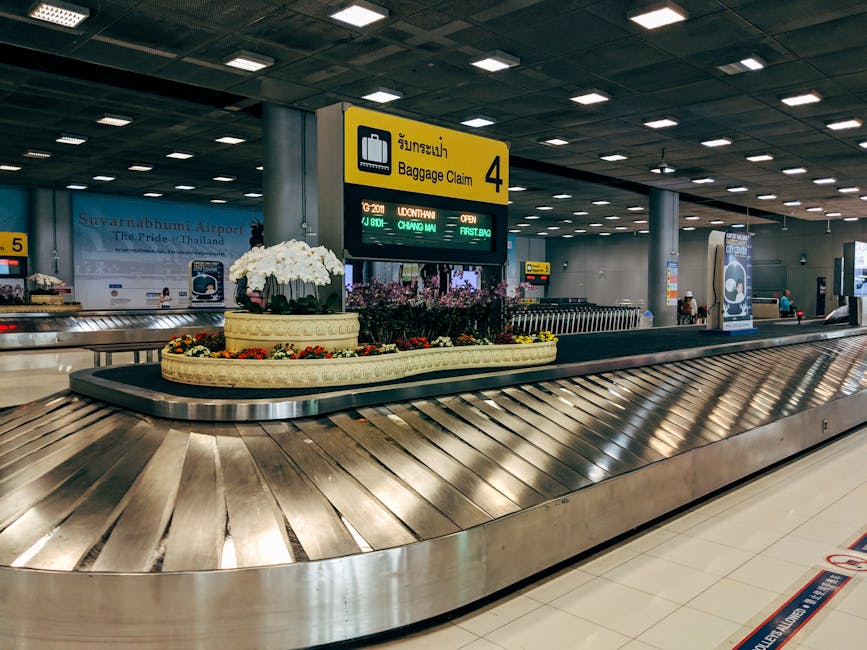
I learned more about human nature standing at Carousel 4 in Vegas than in any physics lecture. You watch people hover. They circle. They check the screen, then their phone, then the belt, as if the re
I learned more about human nature standing at Carousel 4 in Vegas than in any physics lecture. You watch people hover. They circle. They check the screen, then their phone, then the belt, as if the repetition will speed up the machinery. It won't. The belt is not a slot machine. It doesn't respond to your desperation.
Here is the thing: the baggage claim is a cargo cult of patience. We built the ritual—the standing, the staring, the sighing—but we forgot the actual mechanism. The bags arrive when they arrive. Your anxiety does not change the conveyor belt's speed. Yet we stand there, performing "waiting," convinced the performance matters. It doesn't.
I found out the hard way that this isn't about luggage. It's about control. You can't control the plane, the crew, or the baggage handlers. So you fixate on the one thing you think you can will into existence: the appearance of your bag. When it doesn't show up, your brain treats it as a personal failure. That is a mental health trap. You are not failing. The bag is just late.
The best airports for solo travel get this. Singapore Changi doesn't just have a butterfly garden—it has a baggage claim that moves fast and communicates clearly. The airport treats waiting as a design problem, not a virtue test. Meanwhile, the worst airports treat the carousel like a punishment. No updates. No transparency. Just you and the void.
Here is the trick to avoid baggage claim delays: don't check a bag. That's it. That's the whole secret. The people who breeze past you, the ones who look smug? They packed light. They didn't sign up for the cargo cult. If you must check a bag, track it with an AirTag and ignore the screen. The screen is a lie designed to keep you staring.
Honestly, the solo traveler has an advantage here. You have no one to perform for. You can sit on the floor. You can read a book. You can stop pretending that staring at a rubber flap is productive.
The truth is, we treat baggage claim as a microcosm of every delayed gratification in life. We want the reward now, and the waiting feels like a personal insult. But the waiting is not the enemy. The story you tell yourself about the waiting—that's the enemy. That's the mental health issue. (Source: NPR, 2025)
You can't control the belt. You can control your story. Stop staring. Go get a coffee. The bag will be there when you get back. If it's not, that's what the airline's app is for. The airport is not judging you. The belt is not judging you. You are the only one keeping score, and you're losing.
FAQ
Q1: What is the mental health benefit of stopping the "baggage claim stare"?
The "stare" is a control ritual that fails. Letting go of the illusion of control reduces anxiety in the moment and builds a healthier pattern for handling unpredictable delays elsewhere. (Source: NPR, 2025)
Q2: What are the best airports for solo travel regarding baggage?
Airports like Singapore Changi that prioritize speed and clear communication. For more travel mindset tips, check out our guide on /ventnest/travel.
Q3: How does this connect to the cargo cult mindset?
A cargo cult is mimicking the form without the function. Staring at the belt is the form; getting your bag is the function. Only one of those is in your control. For more on solo travel logic, see /ventnest/solo.