Leave a thought
The Dog That Taught Me I Was Lying to Myself About Being Alone
Last night I was scrolling through my phone — bad habit, I know — and I saw a headline about young people in China buying AI pets instead of getting married or having kids. The Washington Post ran it.
Last night I was scrolling through my phone — bad habit, I know — and I saw a headline about young people in China buying AI pets instead of getting married or having kids. The Washington Post ran it. And I thought, huh. We finally did it. We replaced the one thing that doesn't care whether you're optimized, productive, or emotionally articulate with a thing that does exactly what you tell it to.
Here's the thing that bothers me. A pet is not a product. A pet is a relationship with something that has its own agenda. That's the whole point. And we keep trying to engineer that agenda away.
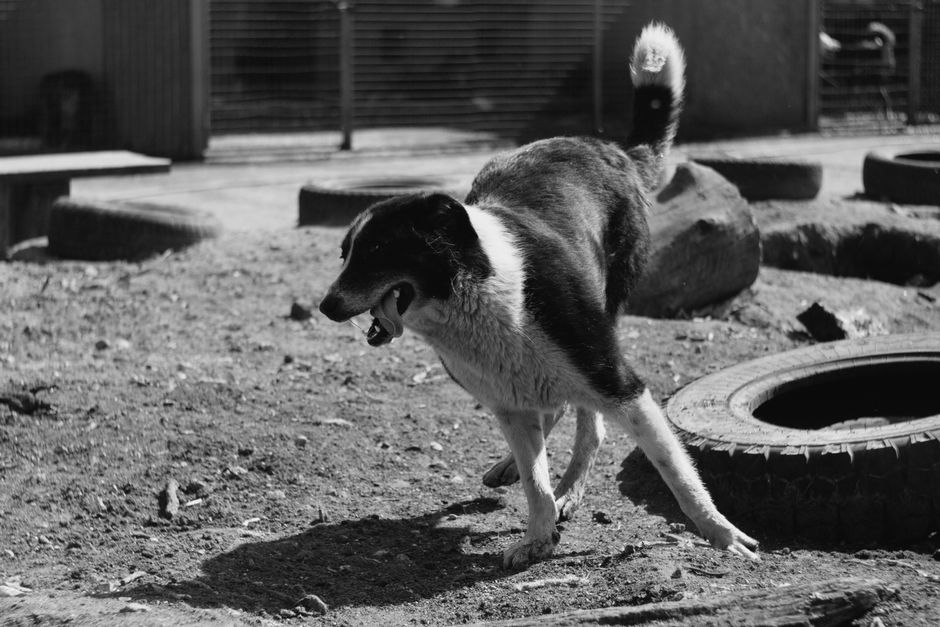
I learned this the hard way with a dog named Gus. Not my dog — my neighbor's dog, back when I was living in a studio apartment and telling everyone I was fine. Gus was a fat beagle with no respect for personal space and a nose that operated independently of the rest of his body. He'd wander into my place whenever the door was open, sniff everything, knock over a plant, and leave. He never asked how I was doing. He never validated my feelings. He was, honestly, kind of a jerk.
I loved him more than almost anything.
And that's the part the AI companion industry doesn't want to hear. A pet is a relationship where you are not in control. That's not a bug. That's the entire mechanism by which it heals you.
Let me give you a definition, because I think this matters: A pet is a living being whose needs are real and whose affection cannot be manufactured. Here is why that matters. When something real depends on you — actually depends, not performatively — your brain stops treating you as the center of the universe. That's the medicine. Not the cuddling. The obligation.
The data backs this up in ways that surprised even me. A narrative synthesis published in Frontiers in Psychology looked at how companion animals deliver therapeutic mechanisms outside formal mental health care, and the throughline wasn't "pets make you happy." It was that pets create structure, routine, physical touch, and a sense of being needed — the exact things that loneliness strips away. Meanwhile, a study in Scientific Reports found that loneliness mediates the relationship between pet ownership and well-being. Translation: pets don't just make you feel better. They interrupt the loneliness loop. But only if the relationship is real.
Now here's where I have to be honest, because the research is honest and I'd be a coward not to say it. Pets comfort the lonely, but relying on them too much may backfire. That's from News-Medical, and it's not a small caveat. If you make your dog your entire social world, you're not healing. You're hiding. The dog becomes a warm body you use to avoid the terrifying work of being known by other humans. I've done this. It's comfortable. It's also a slow leak.
So the counterpoint to "get a pet for your mental health" is this: get a pet because you want to care for something, not because you want something to care for you. The direction matters. The responsibilities of pet ownership — the vet bills, the 6am walks, the destroyed shoes, the fact that you cannot spontaneously travel — those aren't the price of admission. They are the admission. They're what pulls you out of your own head. If you're looking for a pet to fill a hole, you'll just end up with a hole shaped like a pet.
And this is why the AI pet thing disturbs me. It's cargo cult love. It has all the external forms — the companionship, the responsiveness, the little personality quirks — but none of the core. A real pet can reject you. A real pet can get sick. A real pet can die. That risk is not a design flaw. It's the thing that makes the love mean something. An AI pet that never dies and never needs you isn't a companion. It's a mirror with a battery.
I'm not saying don't get a pet. I'm saying get one for the right reason. Get one because you're ready to be inconvenienced by something that doesn't care about your schedule. Get one because you want to learn how to love something that can't be optimized. The benefits of having a pet are real — lower blood pressure, more movement, less rumination, a reason to get up. But they come as a side effect of the relationship, not as a feature you can purchase.
Care for your pet by remembering that they are not a treatment plan. They're a creature. A weird, demanding, mortal creature. And the day you realize you'd rather be inconvenienced by them than comfortable without them — that's the day you've actually learned something.
I still think about Gus. He's gone now. And I'm not going to pretend I handled it well. But I'll tell you what he taught me: that being needed is different from being wanted, and only one of those things will save you.
The other one just tells you what you want to hear.
FAQ
Q1: What are the actual mental health benefits of having a pet?
Research shows pets reduce loneliness, create routine, provide physical touch, and give a sense of being needed. A study in Scientific Reports found that loneliness mediates the link between pet ownership and well-being — meaning pets help most when they interrupt isolation, not when they replace human connection entirely.
Q2: How can I care for my pet without making it my entire emotional world?
Treat pet ownership as a relationship with responsibilities, not a therapy subscription. Meet their real needs — vet care, exercise, structure — and keep human relationships alive alongside them. As one analysis noted, relying on pets too much can backfire, so balance is the actual care.
Q3: What are the responsibilities of pet ownership that people underestimate?
The daily, unglamorous stuff: 6am walks, vet bills, destroyed belongings, and the loss of spontaneous travel. These aren't the cost of the relationship — they are the relationship. If you're not ready to be inconvenienced by something with its own agenda, you're not ready for a pet.